
As an Amazon Associate, we earn from qualifying purchases. This post contains affiliate links; buying through them costs you nothing extra.
Dog chewing everything in sight is normal behavior—the problem is the target, not the chewing itself. This covers why dogs chew destructively and how to redirect it for good.
Quick answer
- Chewing is natural; your goal is redirecting it to approved toys, not eliminating it entirely.
- Match the fix to the cause: teething puppies need chew toys, bored adults need more exercise and mental enrichment.
- If chewing happens only when you leave and comes with pacing or accidents, address separation anxiety, not just boredom.
- Manage the environment first—block access to off-limits items—while consistently rewarding your dog for choosing their own toys.
Why Does My Dog Chew Everything? (It Is Normal, Mostly)
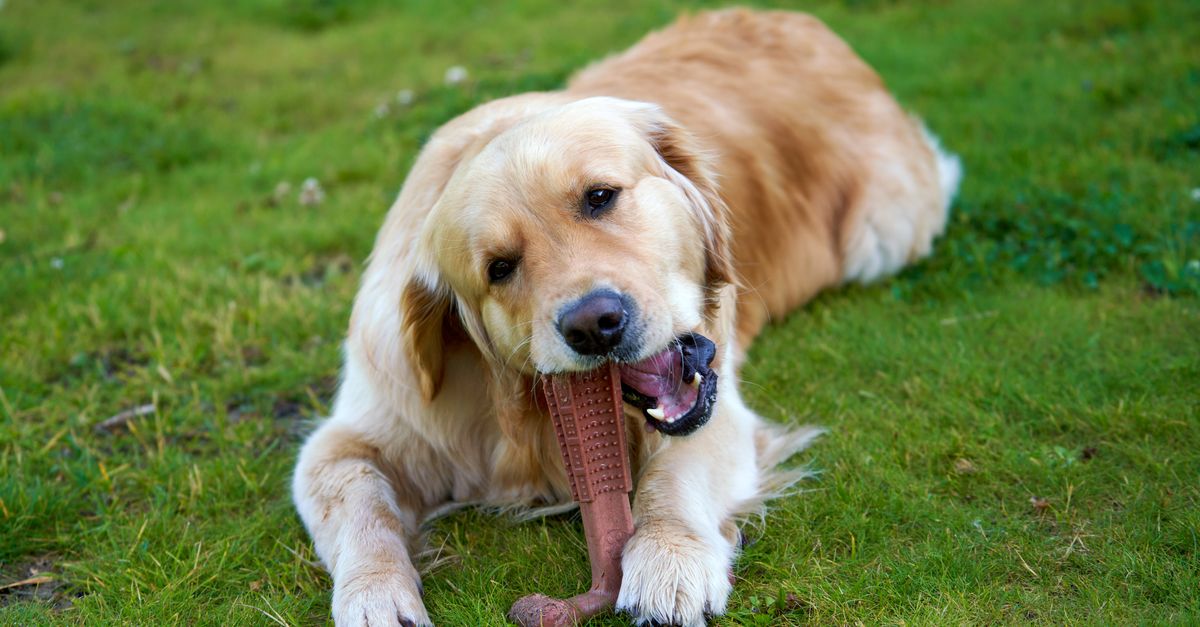
Dogs explore the world with their mouths the way we use our hands. Chewing relieves boredom, eases stress, keeps jaws strong, and just plain feels good. A dog that never chews anything would actually be unusual.
So your goal is not to stop chewing altogether, which is neither realistic nor fair to the dog. Your goal is to give your dog acceptable things to chew and make the off-limits items boring or unavailable. When people try to punish chewing out of existence, it usually backfires and can create anxiety that makes the chewing worse.
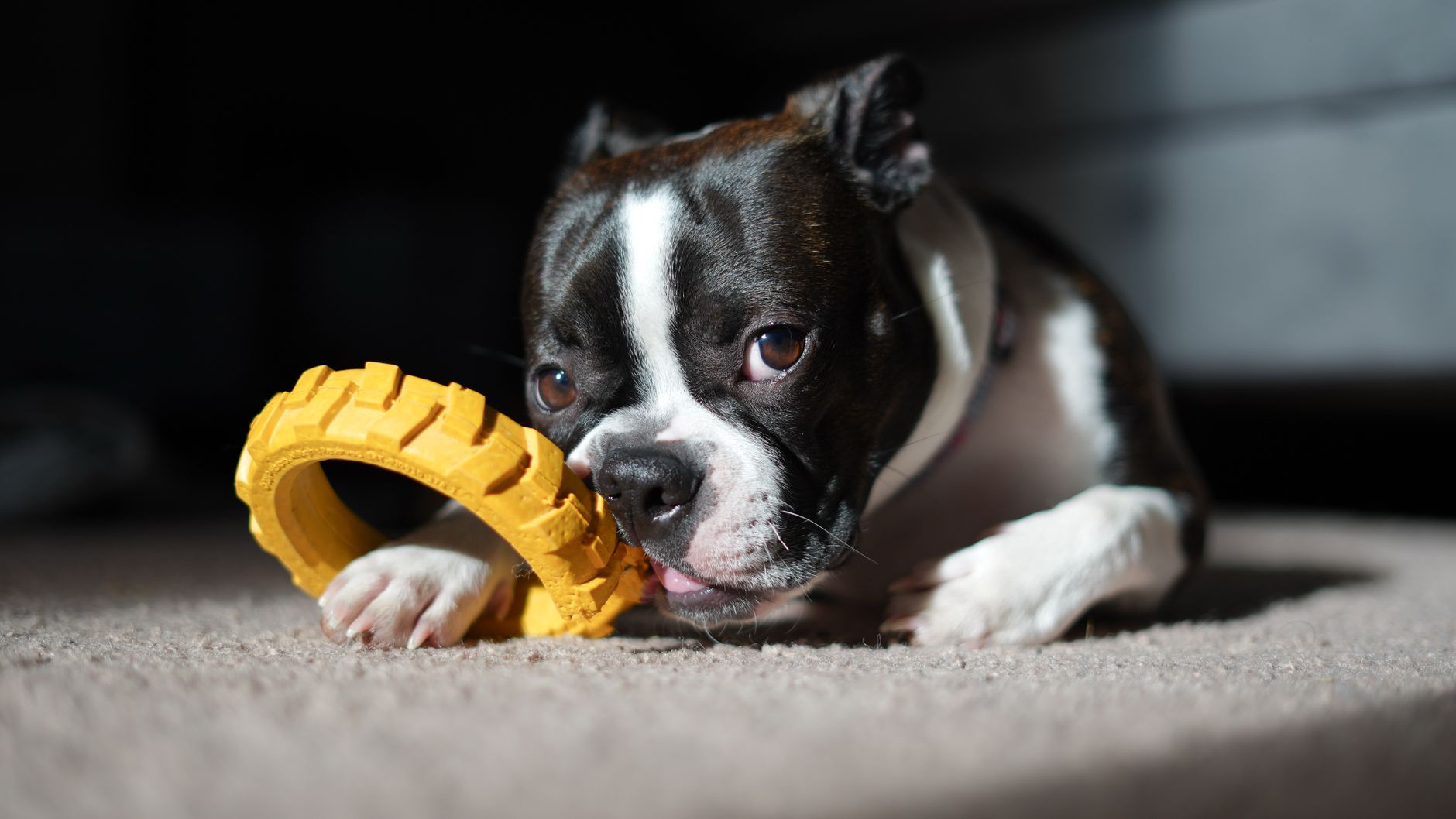
Puppies vs. Adult Dogs
The cause often depends on your dog’s age, so start there.
Puppies chew because they are teething and because everything is new. Puppy teething discomfort peaks between roughly three and six months, and chewing brings relief to sore gums. This phase is temporary, but it is intense, and a puppy left with access to your belongings will find them.
Adult dogs that chew destructively usually are not teething. For them, the cause is almost always one of three things: boredom, too little exercise, or stress and anxiety. If your previously well-behaved adult dog suddenly starts destroying things, that change is a clue worth paying attention to.

Boredom and Too Little Exercise
This is the single most common reason behind adult destructive chewing, and it is also the easiest to fix.
A dog with pent-up physical and mental energy will find an outlet, and your furniture is a convenient target. Under-exercised dogs, high-energy breeds especially, are basically telling you they need a job. Before you blame the dog, ask honestly whether they are getting enough daily activity.
The fix is more enrichment, not just more scolding:
- Increase daily walks or active play, aiming for real physical tiredness, not a quick trip around the block.
- Add mental work: puzzle feeders, snuffle mats, training games, and hiding treats around the house. A sliding-block puzzle such as the Nina Ottosson Dog Brick turns part of a meal into a 10-minute job.
- Rotate toys so a few stay novel instead of leaving everything out at once.
- Use a stuffed, freezable chew toy to keep your dog busy during downtime. The KONG Classic filled with wet food or plain yogurt and frozen overnight is the standard version.
A tired, mentally satisfied dog simply has far less drive to destroy things.

Separation Anxiety and Stress Chewing
If the chewing happens mainly when you are gone, and especially if it comes with pacing, whining, drooling, or accidents, you may be looking at separation anxiety rather than boredom.
Stress chewing is a coping mechanism, so the fix is different. Simply adding toys will not resolve true separation anxiety. These dogs need help feeling safe when alone, through gradual desensitization to your departures, calm arrivals and goodbyes, and a comfortable, secure space. Severe cases benefit from a certified trainer or veterinary behaviorist, and your vet can rule out medical contributors and advise whether additional support is warranted.
Do not punish anxiety-driven chewing. To an already stressed dog, punishment adds fear and usually makes the behavior worse.
Chewed door frames and window sills are a classic sign that the chewing is about being left, not boredom. Our guide to a dog scratching at the door all day covers that pattern in detail, and dog barking when left alone walks through a full 7-step plan for alone-time problems. If you are not sure when the chewing happens, a pet camera pointed at the usual target will tell you whether it starts in the first minutes after you leave or hours later, which points to anxiety or boredom respectively.

How to Redirect Chewing the Right Way
Whatever the cause, the day-to-day method is the same: prevent access to the wrong items, and reward chewing on the right ones.
1. Manage the environment. Until the habit is retrained, keep tempting items out of reach and use baby gates or a crate when you cannot supervise. You cannot correct what you are not there to see.
2. Offer better options. Provide a small variety of appropriate chew toys with different textures so your dog has an obvious legal outlet. Strong chewers often need something harder than plush or soft rubber, such as the Benebone Wishbone nylon chew. Pick a size your dog cannot fit entirely in its mouth, and replace any chew once pieces start breaking off.
3. Trade, do not chase. When you catch your dog with a forbidden item, calmly swap it for an approved toy and praise them for taking it. Chasing turns it into a fun game.
4. Reward the good choice. Every time your dog chooses their own toy, praise or reward it. Dogs repeat what pays off.
5. Make off-limits items unappealing. A pet-safe bitter deterrent spray such as Grannick’s Bitter Apple on furniture legs or cords can help, paired with plenty of legal alternatives. Test it on a hidden spot first, and reapply daily at the start, since the taste fades.
Consistency from everyone in the household is what makes this stick. Mixed messages slow everything down.
Puppy-Proofing and Dog-Proofing Your Home
Management prevents most disasters while training catches up. Use this quick checklist:
| Area | Risk | Quick fix |
|---|---|---|
| Shoes and laundry | Favorite chew targets | Closed closets, lidded hampers |
| Electrical cords | Chewing hazard, dangerous | Cord covers, route out of reach |
| Trash and food waste | Scavenging and chewing | Lidded or cabinet-latched bins |
| Furniture legs | Boredom chewing | Bitter deterrent plus chew toys nearby |
| Kids’ and pet toys | Easily confused with dog toys | Store separately, teach what is theirs |
| Houseplants | Some are toxic if chewed | Move up high, remove toxic species |
When Chewing Signals Something Bigger
Most chewing is behavioral, but check in with your vet if chewing is sudden and extreme, if your dog is eating and swallowing non-food objects (a dangerous condition called pica), if there are signs of mouth pain, or if it comes with other worrying changes. Compulsive chewing and true separation anxiety are also worth professional guidance rather than going it alone.
Chewing or licking at their own body is a different issue from chewing objects. A dog that chews its paws, shakes its head, or scratches its ears often has an itch, allergy, or ear problem; see our guide to a dog shaking its head and scratching its ears.
Final Thoughts
Destructive chewing feels personal, but it is really your dog communicating a need, usually for a teething outlet, more activity, or relief from stress. Meet that need, manage the environment so mistakes cannot happen, and consistently reward the right choices, and the shredded shoes become a thing of the past. Be patient: you are replacing a deeply natural behavior’s target, not erasing the behavior, and that takes a few weeks of steady effort.
FAQ
At what age do puppies stop chewing so much?
Teething chewing usually eases once the adult teeth are in, around six to seven months. Many dogs keep a strong urge to chew into early adulthood, so keep offering safe chews after teething ends.
Why does my dog only chew things when I leave?
Chewing that happens only when you are away points to boredom during long stretches alone or to separation anxiety. If it comes with pacing, howling, drooling, or accidents, treat it as anxiety rather than a toy problem.
Are bully sticks and antlers safe for chewing?
Very hard chews like antlers and hooves can crack teeth. A common rule of thumb is that if you cannot dent the chew with a fingernail, it may be too hard. Ask your vet what suits your dog’s size and chewing style.
Does crating a dog stop destructive chewing?
A crate prevents damage while you are out, but it does not fix the reason for the chewing. Use it alongside more exercise, puzzle feeding, and chew toys, and never as punishment.
Sources: ASPCA guidance on destructive chewing; American Kennel Club advice on puppy teething and chew safety; manufacturer product information for the items below. Product listings and links checked October 24, 2026.
Related reading: Dog Scratching at the Door All Day? Causes and Fixes and Dog Not Eating While You’re Away? 7 Proven Fixes.
Gear that helps with this
Picks that match the fixes above.
- Stuffable chew: KONG Classic – fill with wet food and freeze for a long, legal chewing session.
- For strong chewers: Benebone Wishbone – hard nylon chew shaped so the dog can hold it with its paws; replace once it splinters.
- Mental work: Nina Ottosson Dog Brick – sliding-block treat puzzle for bored adult dogs.
- Deterrent: Grannick’s Bitter Apple spray – bitter taste on furniture legs and cords; works best paired with a chew toy nearby.
- Block off rooms: Babelio Dog Gate – pressure-mounted gate that keeps a chewer out of rooms you cannot supervise.
The Smart Dog Owner’s Gadget Checklist
20 gadgets worth owning, 8 to skip, and how to choose the right one — sent straight to your inbox.