
As an Amazon Associate, we earn from qualifying purchases. Buying through our links costs you nothing extra.
A dog that barks when you leave is telling you one of a few different things: it is panicking, bored, reacting to the street, or has learned that departures mean stress. Each needs a different fix. This guide shows how to find out which one you have, then walks through seven steps that make alone time quieter.
Quick answer

- Record the first 30–60 minutes after you leave. When the barking starts and how your dog looks tells you whether it is anxiety, boredom, or outside triggers.
- Remove easy triggers first: block the view of the street, mask noise, and tire your dog out before you go.
- For anxiety, practice very short, calm departures and build up slowly. Your dog learns you always come back.
- Get help from your vet or a certified behaviorist if your dog panics, injures itself, or does not improve after three to four weeks.
Why dogs bark when you leave
Most barking at departures falls into four patterns, and the same bark can come from any of them:
- Separation anxiety or distress. A real stress response to being alone. It is common in dogs adopted as adults, dogs whose routine changed suddenly, and very people-focused breeds. These dogs are not being difficult; being alone feels unsafe to them.
- Boredom. An under-exercised or under-stimulated dog barks out of frustration rather than fear, usually later in the day.
- Territorial or reactive barking. The dog is responding to people, dogs, or noises outside, and you happen to be out.
- Learned departure cues. Keys, shoes, and a coat have come to predict being left, so the barking starts before the door even closes.
The fix for one can make another worse. More exercise helps a bored dog but does little for a panicking one. Talking to your dog through a camera can soothe a mildly restless dog and wind up a frantic one. That is why the first step is finding out what is actually happening.
Step 1: Record what happens after you leave

For three ordinary days, leave exactly as you normally do and record at least the first hour. A phone or old laptop on a video call works for this; a camera with two-way audio and saved clips becomes useful later. Aim it where your dog actually waits, which is often a window or the room you use most, not just the front door. Mount it near dog-eye height and keep the sound on, because the bark itself tells you a lot.
Watch the footage at double speed and note four things: how many minutes until the first bark, how long it lasts, what your dog’s body is doing (pacing, drooling, scratching, or relaxed between barks), and whether something outside set it off. If you want a camera that saves clips without a monthly plan, the Tapo C211 2-pack records to a microSD card and covers two rooms. Our best pet cameras guide compares other options, and our pet camera subscription study shows which brands charge to keep recordings.
Step 2: Read the pattern
- Barking within one to five minutes, frantic, with pacing, drooling, or scratching at the door: separation anxiety. Focus on Steps 5 and 7.
- Calm for 20–40 minutes, then bursts of barking with a relaxed body: boredom. Step 3 will do most of the work.
- Barking that lines up with sounds or movement outside: territorial or reactive barking. Block the view and mask noise in Step 4.
- Barking starts when you pick up your keys: learned departure cues. Step 5 includes fake departures to defuse them.
Many dogs show a mix. Start with the strongest pattern. If the footage also shows scratching at the door, our guide to a dog scratching at the door all day covers it, and if your dog skips meals while you are out, see dog not eating while you’re away.
Step 3: Tire your dog out before you go
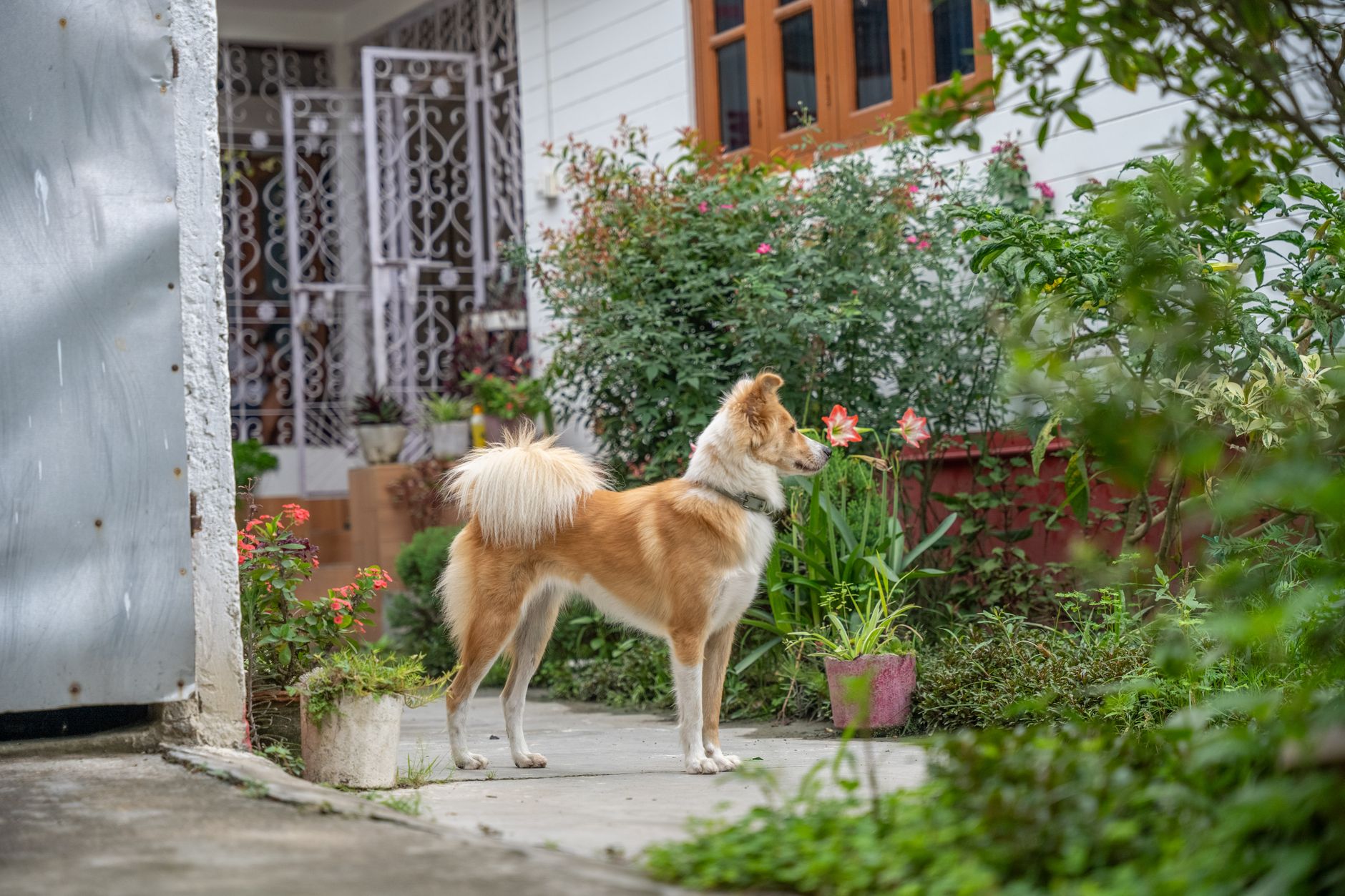
A dog that has had a real walk and some brain work before you leave has far less energy left for barking. Aim for 20–30 minutes of walking or play that leaves your dog properly tired, plus a few minutes of sniffing or training.
Then give your dog a job for the first part of the day. A KONG Classic stuffed with wet food and frozen overnight takes most dogs a good while to finish, and a sliding puzzle like the Nina Ottosson Dog Brick turns breakfast into problem solving. Save these for departures only, so leaving starts to predict something good. If your dog also chews furniture while alone, our guide to a dog that chews everything has more ideas.
Step 4: Remove the triggers you can see
- Street view: close blinds, add frosted film to the lower part of the window, or keep your dog out of the front room. A dog gate across a doorway is often enough.
- Noise: a fan-based white noise machine such as the Yogasleep Dohm Classic, or a radio on a calm talk station, masks footsteps, doors, and passing dogs.
- Safe spot: give your dog a place it already likes, such as a bed or a crate it has been properly introduced to, with a chew it only gets when you leave and an item of your worn clothing. Never use the crate as punishment.
Record again after these changes. For many dogs this step alone cuts barking sharply, and the footage lets you see it rather than hope for it.
Step 5: Practice short, boring departures

For anxiety-driven barking, the core work is teaching your dog that departures are short, uneventful, and always end with you coming back.
- Start below the point where barking began. If the first bark came at minute two, your first practice is 30–60 seconds outside the door.
- Come back calmly, with no big greeting. Keep goodbyes low-key too.
- Add 30–60 seconds each time your dog stays relaxed. If barking returns, drop back to the last successful length for a couple of sessions.
- Mix in fake departures: pick up keys, put on shoes, then sit back down. This takes the sting out of the cues your dog has learned.
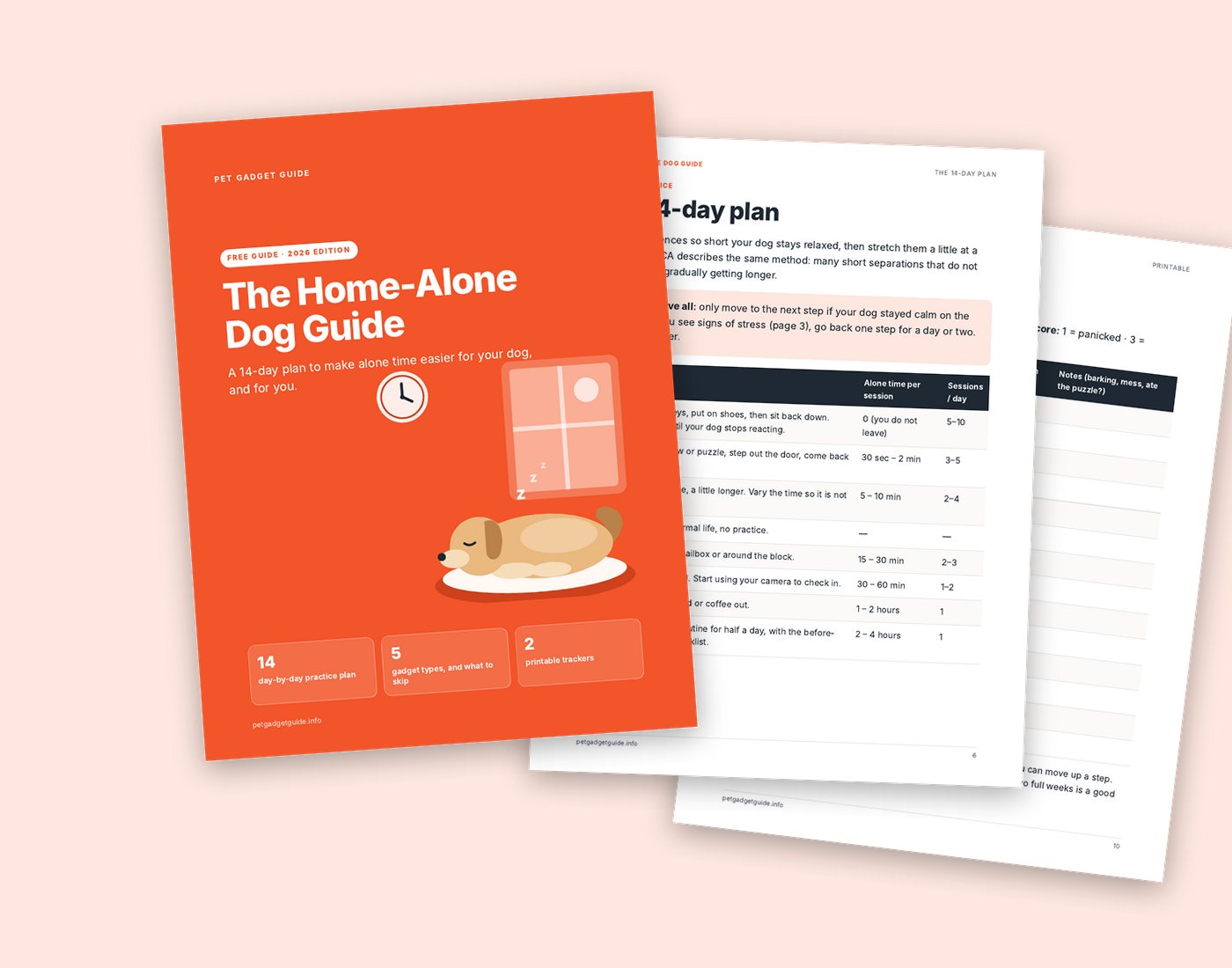
Several short sessions a day add up quickly. Many owners see a real change within two to four weeks, and the recordings show progress on days it does not feel like it.
Step 6: Use two-way audio carefully, and add support
A camera with two-way audio can help a mildly unsettled dog: one calm, familiar phrase as the pacing starts, then silence. Reward quiet, not noise. Do not talk every time your dog barks, or barking becomes a way to summon your voice. For a dog in real panic, hearing you without seeing you can make things worse; skip audio until desensitization has made progress.
Some owners also use a dog-appeasing pheromone diffuser, such as the ThunderEase Dog Calming Diffuser (powered by Adaptil), in the room where the dog waits. Results vary, and it works alongside training rather than replacing it. If your dog is alone for eight hours or more, a midday walk from a neighbor or dog walker, or a day or two of daycare, can make a big difference on its own.
Step 7: Know when to call a professional
Contact your vet or a certified trainer or veterinary behaviorist if the footage shows:
- panic that does not ease after 30 minutes, such as continuous howling, heavy drooling, or attempts to escape;
- injuries from scratching or chewing at doors and crates;
- no improvement after three to four weeks of consistent practice.
Also see your vet if the barking started suddenly in a dog that used to be fine alone. Pain and other medical problems can change behavior, and they should be ruled out first. Problems like refusing water while you are at work, covered in our guide to a dog that won’t drink water while you’re at work, are worth mentioning at the same visit, as is constant head shaking or ear scratching (see our guide to a dog shaking its head and scratching its ears).
FAQ
Will my dog eventually stop barking when I leave?
Sometimes. Barking from boredom or a recent change in routine often fades within a few days to a couple of weeks. Barking driven by separation anxiety rarely fades by itself and can get worse, because each departure repeats the stress. If it lasts more than two weeks or comes with scratching, pacing, drooling, or accidents, treat it as anxiety and start Step 5.
Should I get a second dog for company?
Not as a fix. Some anxious dogs stay just as distressed with a companion, because the attachment is to you. Work on the root problem first.
Will punishing my dog when I get home help?
No. By the time you are home, your dog cannot connect the scolding with barking hours earlier. It adds fear and makes departures more stressful.
Why does my dog only bark when I leave, not my partner?
Dogs often bond most strongly with one person. The same steps apply; your dog needs to learn that your departures, specifically, are safe.
Can a bark collar stop it?
Bark collars suppress the noise without addressing why the dog is barking. For an anxious dog they can increase fear. Most trainers who work on separation problems advise against them.
Will watching the camera make me more anxious?
It can. Review footage once in the evening rather than checking the live feed all day. The point is information, not constant monitoring.
How We Researched This
We did not test these products in person. The steps follow widely used approaches to separation-related problems in dogs, cross-checked against veterinary and animal welfare guidance, and the product notes come from manufacturer listings. This is general information, not a substitute for advice from your vet or a behaviorist. Our method.
Sources: ASPCA guidance on separation anxiety in dogs; American Veterinary Society of Animal Behavior position statements on humane training; manufacturer listings for the products above. Product listings and links checked October 24, 2026.
Gear that helps with this
Picks that match the steps above.
- Frozen food toy (Step 3): KONG Classic – stuff, freeze, and give only at departures.
- Puzzle feeder (Step 3): Nina Ottosson Dog Brick – turns a meal into a 10-minute job.
- Noise masking (Step 4): Yogasleep Dohm Classic – real-fan white noise that covers street sounds.
- Calming support (Step 6): ThunderEase Dog Calming Diffuser – dog-appeasing pheromone plug-in, powered by Adaptil.
- Recording (Step 1): Tapo C211 2-pack – pan-tilt cameras that save clips to a microSD card, no plan needed.
The Smart Dog Owner’s Gadget Checklist
20 gadgets worth owning, 8 to skip, and how to choose the right one — sent straight to your inbox.
2 thoughts on “Dog Barking When Left Alone: 7 Steps to Quiet Departures”